
Walk through any furniture showroom in Kolkata, and you will notice something interesting: no two customers ever seem to want the same thing. One person is hunting for a dining set that matches an heirloom cabinet passed down from their grandmother. The next is a builder who needs three hundred identical wardrobes delivered to a housing project by next month. Both of them will eventually end up talking to the same industry, just different corners of it.
That’s the real story behind furniture manufacturers in Kolkata today. The city has quietly built a furniture ecosystem that can swing from one-of-a-kind, hand-finished pieces to factory-scale production runs, sometimes within the same workshop.
Understanding how that works isn’t just useful trivia; it can save you a lot of money, time, and frustration if you are the one placing the order.
Table of Contents
Two Very Different Customers, One Industry
Before getting into the “how,” it helps to understand the “who.” Furniture buyers generally fall into two camps.
On one side are individuals and interior designers who want something specific: a certain wood grain, a particular joinery style, dimensions that fit an awkward corner of an apartment. They are not buying furniture; they are commissioning it.
On the other side are businesses, hotel chains, real estate developers, office space operators, and government contractors, who need furniture at scale. They care less about individual character and more about consistency, cost per unit, and delivery timelines that don’t slip.
Kolkata’s furniture makers have learned to serve both without missing a beat, and the way they do it reveals a lot about how the industry actually works behind the scenes.
The Bespoke Route: Slow, Deliberate, Personal
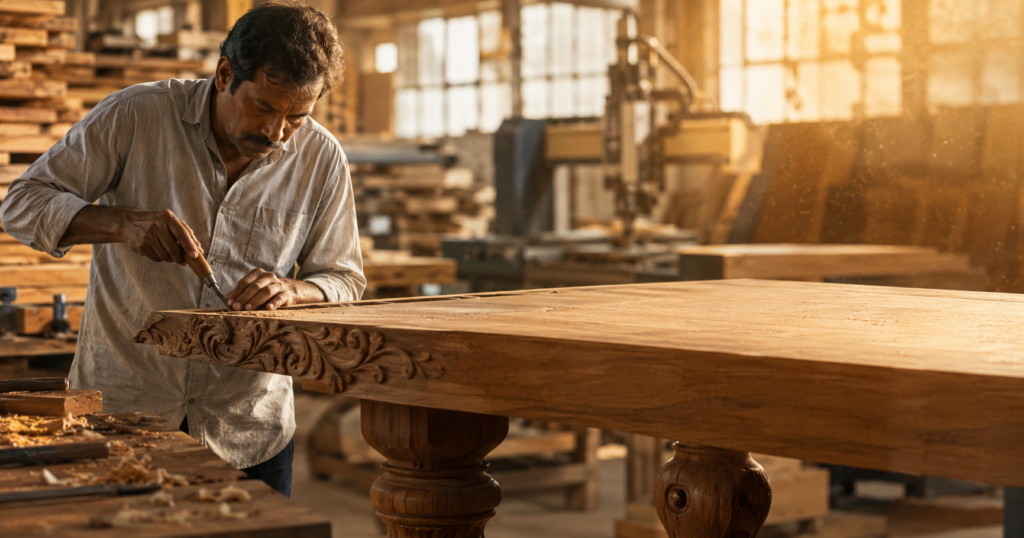
Custom furniture is where craftsmanship gets to show off. When you commission a bespoke piece, you are usually starting with a conversation, not a catalogue. A designer or carpenter sits with you, sketches out ideas, discusses wood types- sheesham, teak, mango wood- and talks through finishes, hardware, and proportions.
Production then moves at a craftsman’s pace. Joinery is often done by hand or with minimal machine intervention. Finishes are applied in multiple coats, with drying time built in between coats. A single wardrobe or dining table might take anywhere from two to six weeks, depending on complexity.
What you are paying for isn’t just wood and labour; it’s flexibility. Want a bookshelf that wraps around a support beam nobody else could figure out how to work with? A custom manufacturer will take that on. This is why architects, boutique hotels, and homeowners doing full renovations often gravitate toward this route.
The trade-off is obvious: higher per-unit cost and longer wait times. But for a piece that needs to be exactly right, there’s often no substitute.
The Bulk Route: Fast, Standardised, Efficient
Now flip the scenario. A real estate developer is furnishing 150 identical two-bedroom flats. A co-working space needs 80 matching desks by the end of the quarter. Nobody in these situations wants “unique”; they want reliable, repeatable, and on-time.
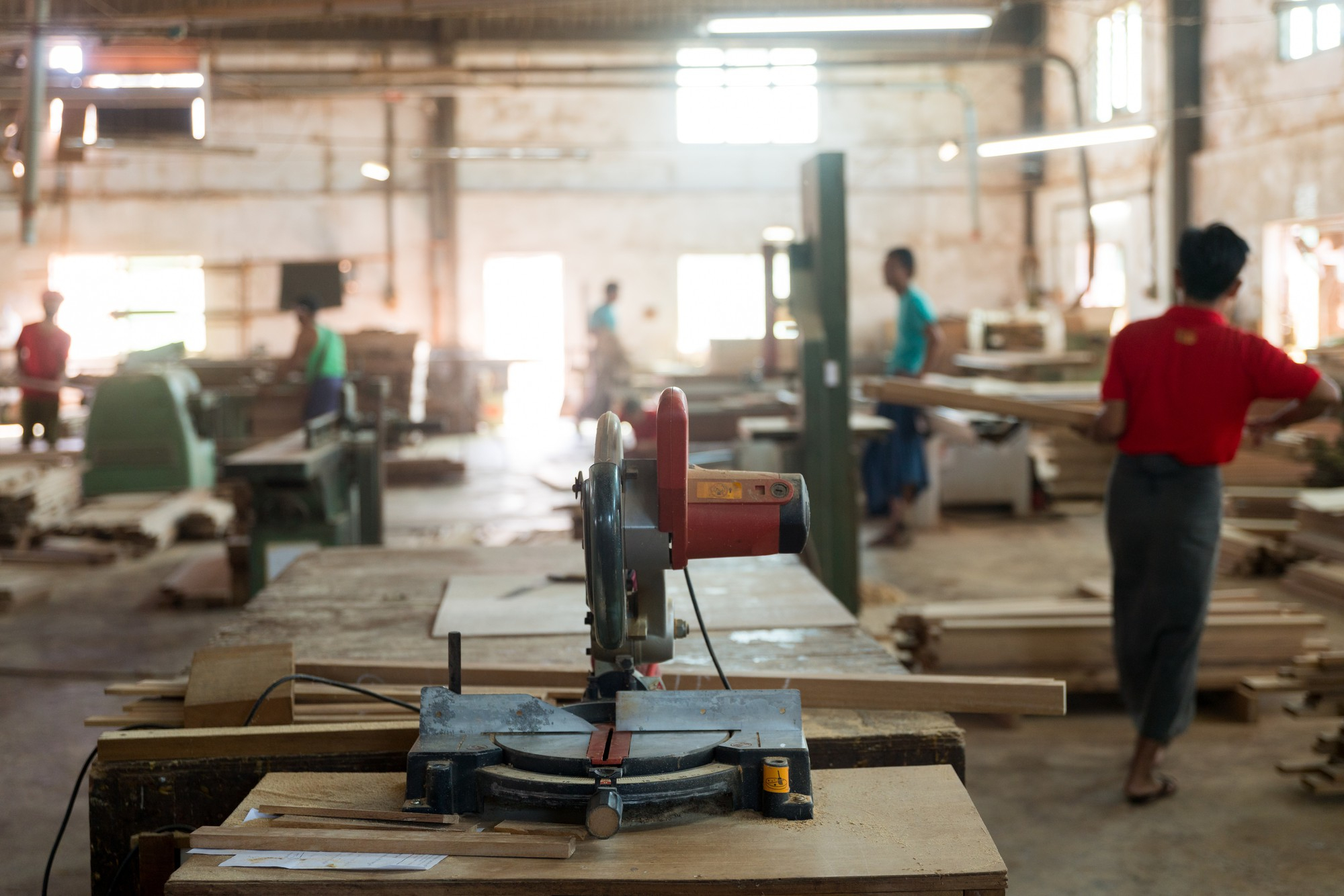
This is where Kolkata’s larger production units shine. Bulk manufacturing relies on standardized designs, pre-approved templates, and machine-driven processes like CNC cutting, automated edge-banding, and assembly-line finishing. Once a design is locked in, the same specifications get replicated across dozens or hundreds of units with minimal variation.
The economics shift too. Raw materials get purchased in much larger quantities, which brings per-unit costs down significantly. Labour is organized around repetition rather than individual craftsmanship, and quality control becomes about consistency; every piece should look and function identically to the last.
Turnaround times shrink dramatically compared to custom work, which matters enormously for anyone working against a project deadline or a fit-out schedule.
Where the Two Worlds Overlap
Here’s what’s genuinely interesting about Kolkata’s furniture scene: many manufacturers don’t pick a lane and stay in it. A single workshop might run a custom design studio on one floor and a semi-automated production line on another.
This hybrid model lets them:
- Take on high-margin custom projects that build reputation and craftsmanship credibility
- Keep bulk contracts running in the background for steady cash flow
- Offer “semi-custom” options, a standardized base design with a few personalized touches, like a choice of finish or hardware, for customers who want a middle ground
This flexibility is part of why the city has held onto its reputation as a serious furniture-making hub, even as demand patterns shift between individual homeowners and large commercial buyers.
How to Decide Which Route Fits Your Project
If you are trying to figure out which approach makes sense for you, a few honest questions usually clarify things fast:
- How many pieces do you actually need? Dozens or more; bulk almost always makes more financial sense.
- How flexible is your timeline? If you can wait a few weeks, custom work opens up. If you are on a hard deadline, standardized production is safer.
- Does the piece need to solve a specific spatial or design problem? Odd angles, matching existing decor, or a very particular aesthetic vision usually call for custom work.
- What’s your budget per unit versus your total budget? Bulk orders often reduce cost per piece dramatically, even if the total order value is high.
There is no wrong answer here, just a better fit for your specific situation.
Furniture manufacturers in Kolkata didn’t become known for their range by accident. It grew that way because the city’s manufacturers figured out, over decades, how to serve two fundamentally different kinds of demand without compromising on either.
Whether you need a single handcrafted centrepiece or a thousand matching units for a commercial rollout, the underlying question is the same: does this workshop understand what you actually need, and can they deliver it the way you need it delivered?
That’s really the mark of a good manufacturer, not whether they specialize in bespoke or bulk, but whether they know which one you need before you’ve fully explained it yourself.
Click here to learn more about furniture and what your space needs.
FAQ:
- Is custom furniture always more expensive than bulk-manufactured furniture?
Generally, yes, per piece. Custom work involves more manual labour, longer production time, and lower material-purchasing efficiency. However, if you only need one or two items, the total cost difference compared to setting up a small bulk order can be minimal.
- How long does bespoke furniture typically take to make?
It varies by complexity, but most custom pieces take between two and six weeks from design approval to delivery. Intricate designs with detailed carving or unusual materials can take longer.
- Can I get a semi-custom option instead of choosing strictly between bespoke and bulk?
Yes, many manufacturers offer this. You pick a standardized base design and then customize specific elements, wood finish, upholstery, or hardware, without paying for a fully bespoke build.
- What should I look for when choosing a manufacturer for a large bulk order?
Focus on production capacity, past delivery timelines, quality consistency across units, and whether they can provide samples before committing to the full order. References from previous commercial clients are also worth asking for.